Surgery is considered when a diagnosed problem is causing significant symptoms, threatening health, affecting fertility, or failing to improve with appropriate non-surgical care. By comparing the condition, test results, reproductive plans, and surgical risks, you can understand when minimally invasive treatment is suitable and when open surgery or observation is safer.
Key takeaways
- Smaller incisions do not make gynecological surgery risk-free.
- Confirm the diagnosis, treatment alternatives, anaesthesia plan, and recovery time.
- Ask which laparoscopic, hysteroscopic, or open approach best suits your condition.
- Check hospital support, surgeon experience, fees, and follow-up arrangements before scheduling.
What minimally invasive gynecological surgery involves
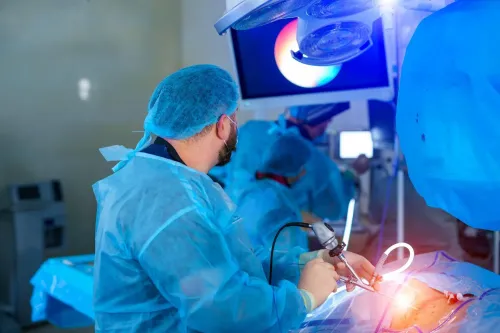
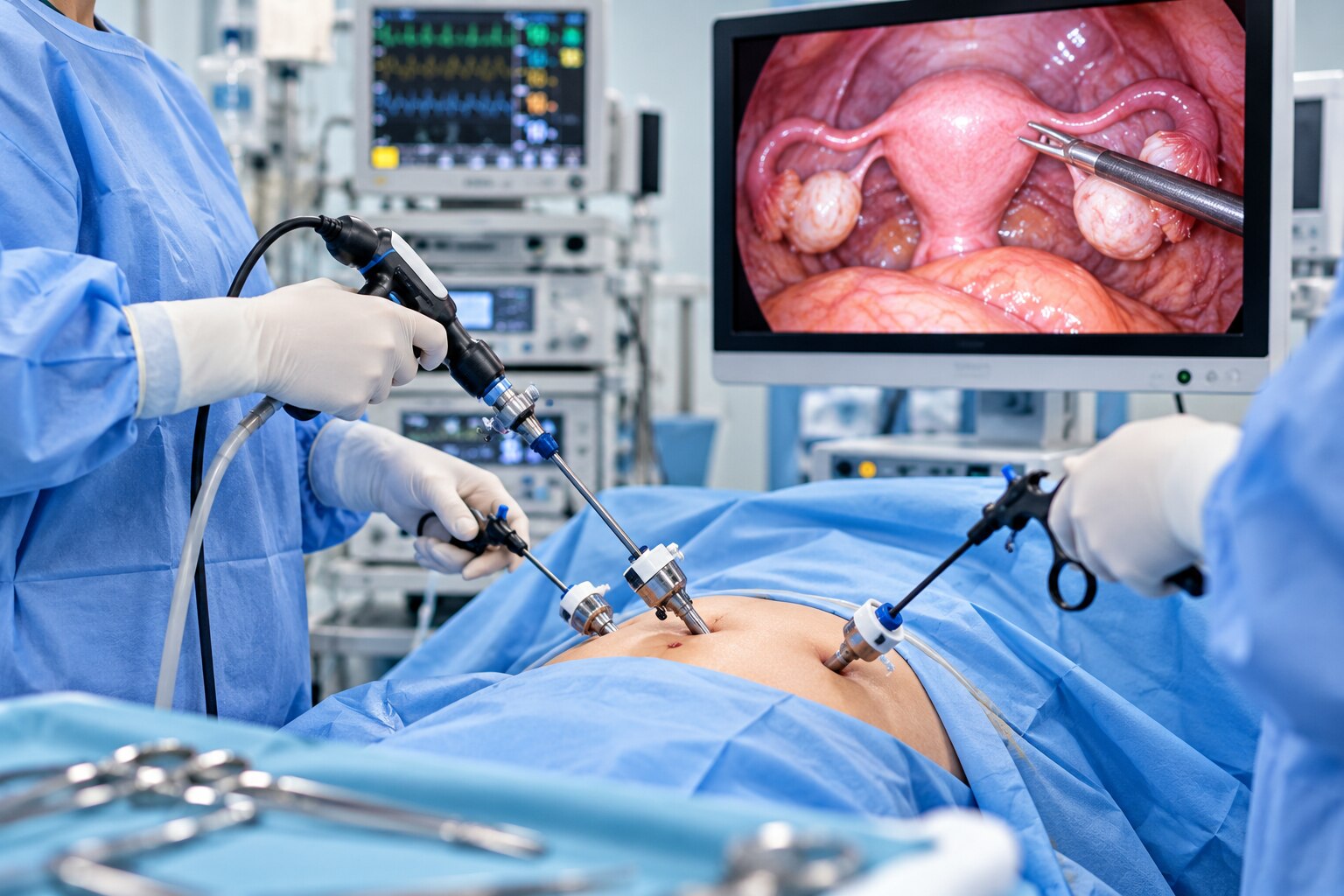
Minimally invasive gynecology surgery in Navi Mumbai uses smaller access routes than open abdominal surgery, but it is not automatically minor or risk-free. The operation, anaesthesia, hospital support, and recovery still depend on what is being treated.
| Approach | Access | What distinguishes it from open abdominal surgery |
|---|---|---|
| Laparoscopy | Several small abdominal incisions for a camera and instruments | Avoids one large abdominal incision; the surgeon operates through long instruments while viewing a magnified image. |
| Hysteroscopy | A camera passes through the vagina and cervix into the uterine cavity | Usually needs no abdominal incision; it treats problems inside the uterus, such as selected polyps or fibroids. |
| Vaginal surgery | Access through the vagina | Avoids abdominal skin incisions for suitable procedures, including some prolapse and uterine operations. |
| Robotic surgery | Small abdominal incisions with robotic-assisted instruments | The surgeon controls wristed instruments from a console; it does not remove surgical risks or guarantee better results than laparoscopy. |
| Open abdominal surgery | One larger incision in the abdomen | Gives direct access and may be safer for extensive disease, large masses, severe adhesions, suspected cancer, or urgent bleeding. |
Laparoscopy can shorten incision-related recovery, but bleeding, infection, blood clots, anaesthetic complications, or injury to the bowel, bladder, ureter, or blood vessels remain possible. Severe adhesions, difficult anatomy, or bleeding can require conversion to an open operation, so ask about that plan during a diagnosis-based consultation.
Which conditions can make surgery worth considering
Surgery becomes worth discussing when a condition causes persistent symptoms, threatens health, affects fertility, or has features that cannot be safely explained by observation. The operation is not chosen by diagnosis alone: severity, scan findings, age, pregnancy plans, cancer risk, and response to non-surgical treatment all matter.
| Condition | When surgery is worth discussing | When non-surgical care may fit |
|---|---|---|
| Fibroids | Heavy bleeding, anaemia, pressure, pain, infertility, or a cavity-distorting fibroid | Small, symptom-free fibroids or bleeding controlled with medicines |
| Ovarian cysts | Persistent pain, growth, torsion risk, complex appearance, or suspected cancer | Simple cysts that are small, stable, and low-risk on ultrasound |
| Endometriosis | Pain or infertility continues despite treatment, or deep disease is suspected | Analgesics, hormonal treatment, and monitoring remain effective |
| Prolapse | Bulging, urinary or bowel problems, or failed pessary and pelvic-floor therapy | Pelvic-floor exercises, a pessary, and symptom monitoring help |
| Abnormal bleeding | Polyps, submucosal fibroids, retained tissue, or biopsy findings require removal or diagnosis | Medication or hormonal treatment controls bleeding without a concerning cause |
| Tubal disease | Blocked or damaged tubes prevent conception or increase ectopic risk | Fertility treatment may be preferable when surgery offers little benefit |
| Ectopic pregnancy | Any unstable patient, rupture, significant bleeding, or unsuitable medical treatment requires urgent surgery | Selected stable cases may qualify for medication and close monitoring |
| Cancer | Confirmed or strongly suspected cancer needs prompt specialist planning | Observation is unsuitable until a suspicious finding is properly assessed |
A diagnosis-based consultation for gynecological surgery in Navi Mumbai should compare these choices rather than assume keyhole surgery is best. Ask what happens if you wait, what fertility or ovarian function could be affected, and whether medication, physiotherapy, hormonal care, or fertility treatment addresses the problem more safely.
How examinations and investigations shape the decision
A diagnosis-based consultation decides whether surgery is justified, not which operation sounds newest. A gynecological operation consultation in Airoli should review symptoms, menstrual and pregnancy history, fertility plans, previous abdominal operations, medicines, examination findings, imaging, and blood results. The aim is to compare observation, medication, and surgery.
A pelvic examination can reveal prolapse, cervical changes, tenderness, or a mass. Ultrasound assesses fibroids, endometrial thickness, ovarian cyst appearance, and pregnancy location; MRI adds detail about deep endometriosis or a large, poorly defined mass. A normal ultrasound does not exclude endometriosis.
Each investigation answers a different question:
- A Pap test checks cervical cell changes. An abnormal result usually leads to colposcopy or biopsy, not automatic surgery.
- A biopsy identifies abnormal or cancerous tissue and can change a proposed operation completely.
- A complete blood count detects anaemia from heavy bleeding and helps assess operative risk.
- A pregnancy test prevents inappropriate procedures and identifies an ectopic pregnancy requiring urgent treatment.
- Condition-specific tests, such as thyroid testing, infection testing, or tubal assessment, investigate causes that may respond without surgery.
Observation fits a stable condition with reassuring imaging and manageable symptoms. Surgery becomes more reasonable when symptoms persist, treatment fails, a mass grows or looks suspicious, or urgent disease is present.
Before consenting, ask whether tissue will undergo histopathology, and how the plan affects fertility, ovarian function, transfusion needs, recovery, and possible conversion to open surgery.
How surgeons choose the safest operative approach
The safest approach depends on anatomy, urgency and your health, not on the newest equipment. A mass inside the uterine cavity points toward hysteroscopy; a pelvic mass or endometriosis often suits laparoscopy. Large masses, suspected cancer, dense adhesions, major bleeding or unstable medical conditions can make an open operation safer.
| Option | Best fit | What changes the decision |
|---|---|---|
| Hysteroscopy | Polyps, submucosal fibroids or abnormal tissue inside the uterus | A mass extending deep into the uterine wall, heavy bleeding or suspected cancer may require another operation |
| Laparoscopy | Ovarian cysts, endometriosis, tubal disease or ectopic pregnancy | Previous operations, severe adhesions, a very large mass or uncontrolled bleeding can require conversion to open surgery |
| Robotic assistance | Selected complex pelvic procedures where precise instrument control helps | It does not remove surgical or anaesthetic risks and is not automatically better than laparoscopy |
| Vaginal surgery | Prolapse procedures or removal of a suitable uterus through the vagina | Uterine size, pelvic anatomy, prior surgery and the need to inspect the abdomen affect suitability |
| Open operation | Very large or invasive masses, suspected cancer, extensive adhesions or urgent bleeding | The surgeon may choose it immediately when small-incision access would delay safe treatment |
Pregnancy narrows the timing and procedure choices; urgent ectopic pregnancy or internal bleeding requires rapid treatment. Fertility plans also matter: removing a fibroid, cyst or tube can affect future conception or ovarian reserve, so tissue-sparing options deserve discussion.
In gynecological surgery in Navi Mumbai, ask how diabetes, heart or lung disease, blood-thinning medicines and anaesthesia risk alter the plan. During minimally invasive gynecology surgery in Navi Mumbai, unexpected anatomy or adhesions can change the route mid-operation.
What to confirm before arranging surgery in Navi Mumbai
Do not book an operation until you know what happens if the original plan becomes unsafe. A gynecological operation consultation in Airoli should review your diagnosis, medicines, previous operations, pregnancy history, fertility plans, imaging, and blood tests—not just name a procedure.
Ask these questions during a gynaec surgery Airoli consultation:
- What medication, observation, hormonal treatment, pelvic-floor therapy, or other non-surgical option could I try, and what would surgery add?
- Could this operation reduce fertility, damage the uterus or tubes, or change ovarian function? If so, should we discuss egg preservation or another fertility plan first?
- Will every removed tissue sample go for histopathology, and when will I receive the report?
- What anesthesia will I receive, who will assess me beforehand, and which medicines must I stop?
- Could I need a transfusion? Is a blood bank available, with emergency blood and cross-matching?
- What pain, activity, driving, work, lifting, intercourse, and follow-up restrictions apply during recovery?
- Which complications require urgent treatment, and when would you convert to open surgery or perform another procedure?
| Facility or plan | Confirm before booking | Why it matters |
|---|---|---|
| Hospital | Operating theatre, postoperative monitoring, intensive-care access, imaging, pathology, and emergency services | Delays become dangerous after bleeding or organ injury |
| Surgeon | Training, experience with the proposed approach, and backup for difficult cases | “Minimally invasive” does not prove suitability |
| Contingency | The named trigger for conversion to open surgery and added consent | Adhesions, bleeding, or unexpected anatomy can change the operation |
Dr. Namrata Kshatriya-Obstetrics & Gynecology can help structure this discussion around your diagnosis rather than an operation name.
Related services
Gynaec Surgeries Gynecological surgeries refer to surgical procedures performed on the female reproductive system by gynecologists. View service → |
Laparoscopy Treatment Laparoscopy is a minimally invasive surgical procedure that uses a thin, lighted tube with a camera (laparoscope) to examine the inside of the... View service → |
Frequently asked questions
What does minimally invasive gynecological surgery involve?
It uses small abdominal incisions for laparoscopy or natural vaginal access for hysteroscopy, instead of a larger open abdominal incision. The operation still requires appropriate anaesthesia, hospital support, and recovery planning.
Which conditions can make minimally invasive surgery worth considering?
Doctors may consider it for conditions such as fibroids, ovarian cysts, endometriosis, abnormal uterine bleeding, pelvic organ prolapse, and some causes of infertility. The right option depends on the diagnosis, symptoms, fertility plans, and surgical risks.
Which examinations and investigations guide the decision?
The assessment can include a pelvic examination, pregnancy test, blood tests, ultrasound, MRI, hysteroscopy, or other investigations selected for the suspected condition. Results help determine whether surgery is needed and which approach is safest.
How do surgeons choose the safest operative approach?
They consider the condition’s location and size, previous abdominal operations, medical conditions, anaesthesia risk, fertility goals, available equipment, and the surgeon’s assessment. A minimally invasive approach is not suitable for every patient.
What should you confirm before arranging gynecological surgery in Navi Mumbai?
Confirm the exact diagnosis, proposed operation, alternatives, surgeon and anaesthetist, hospital facilities, expected admission and recovery, warning signs, total fees, and follow-up plan.
Related service
Endoscopy Surgery | Day Care Surgery Endoscopy Surgery This is commonly referred to as day care surgery or ambulatory surgery. Here's some information about endoscopy surgery and day care procedures: 1. View service → |
Keywords